
Canadian Contrasts
Toronto
13 Nights
From
€4,259
pp

Written by Kathryn, Brand and Partnerships Marketing Director
There are places in this world that stop you mid-step. Where you look up, catch your breath, and genuinely struggle to believe what you're seeing is real. Banff is one of those places. Nestled in the heart of the Canadian Rockies, roughly 125 kilometres west of Calgary, Banff National Park is the kind of destination that redefines your idea of wilderness – and we've been sending our customers there for over two decades.
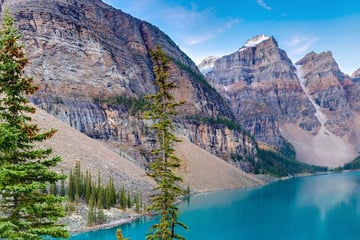
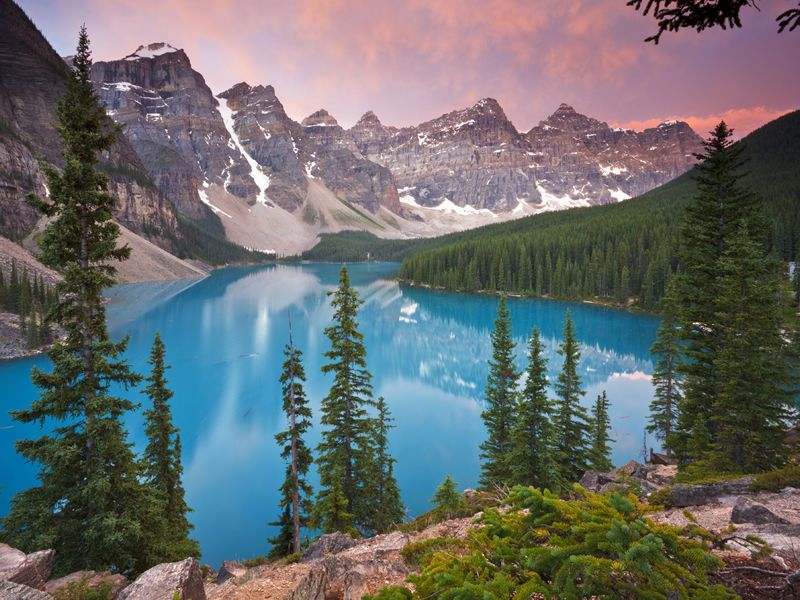
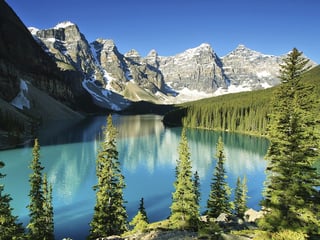
Established in 1885 as Canada's very first national park, and designated a UNESCO World Heritage Site in 1984, Banff spans more than 6,600 square kilometres of raw, staggering mountain landscape. Over four million people visit each year, and once you've stood at the edge of Moraine Lake at dawn – the water an almost artificial shade of turquoise, the Valley of the Ten Peaks reflected perfectly in the surface – you'll understand completely why.
You may well have already seen Banff without knowing it. Those iconic emerald lake images that seem to appear on travel posters, screensavers and desktop wallpapers the world over? That's Moraine Lake. Windows 7 computers came pre-loaded with it as a desktop background. It's that spectacular.
The honest truth about Banff is this: you could spend months here and still not see everything. Whether you're drawn by world-class skiing, epic hiking, extraordinary wildlife, or simply the desire to feel genuinely small in the best possible way, this park delivers. At Canadian Sky, we've curated a range of Banff holidays – from self-drive adventures to fully guided escorted tours – so you can experience it in exactly the way that suits you.
How to get to Banff
Do you need a car in Banff?
The Parks Canada Discovery Pass – Don't forget this
When is the best time to visit Banff?
What to do in Banff in summer
What to do in Banff in winter
Lake Louise
Moraine Lake
Banff Town
The Icefields Parkway: One of the world's great road trips
Ready to plan your Banff holiday?
Frequently Asked Questions
For Irish travellers, Banff starts with a flight to Calgary International Airport – the only realistic gateway to the Canadian Rockies. Most routes from Dublin will involve a connection, commonly through London, Amsterdam or Toronto, with total journey times typically ranging from 13 to 16 hours depending on your layover. From Calgary, Banff is roughly 90 minutes west along the Trans-Canada Highway.
Hiring a car at the airport is what we'd recommend for most visitors – it gives you the flexibility to stop at viewpoints en route and explore the park properly once you arrive. If you'd prefer not to drive, the Brewster Express coach runs directly from Calgary Airport to Banff town and Lake Louise, timed to meet incoming flights. Comfortable, straightforward, and no navigation required.
One tip we always share: if you're arriving after a long travel day, consider spending your first night in Calgary rather than pushing straight on to Banff. The mountains are worth seeing with fresh eyes.
It's one of the most common questions we get – and the honest answer is that a car makes Banff considerably more rewarding, but it isn't essential for everyone.
Banff town itself is compact and walkable. But for Lake Louise and the Icefields Parkway, your own transport makes a real difference. Roam Transit buses connect Banff town with Lake Louise, and Parks Canada operates seasonal shuttles to Moraine Lake (which has no public car parking in peak season – the shuttle is your only option). For a purely town-based stay, you'll manage fine without a car. For anything more adventurous, we'd strongly suggest hiring one.
If you're travelling a self-drive holiday and arriving by hire car, you'll need a Parks Canada Discovery Pass to enter Banff National Park – it's a legal requirement at the park gates. The pass covers all of Canada's national parks, making it particularly good value if you're combining Banff with Jasper or other parks on the same trip.
It can be purchased online in advance via the Parks Canada website, at the park gates on arrival, or at visitor centres in Banff town. We'd recommend buying it before you travel to avoid queues. If you're joining one of our escorted or independent tours, your guide or itinerary will cover park entry separately – so this is primarily something for self-drive and fly-drive travellers to note.
Banff is genuinely a year-round destination, and the best time to visit really depends on what you're after.
June to August is peak summer – the lakes are at their most vivid, all trails are open, and the long days are glorious. It's also the busiest and most expensive period, so popular spots like Moraine Lake and Lake Louise fill up fast. December to March is prime ski season, with reliable powder and a magical snowy atmosphere in town.
Our personal recommendation for first-timers? Mid-May to early June and early October are now the sweet spots for a quieter, more relaxed visit – the crowds have thinned, prices ease off, and the scenery in both spring and autumn is genuinely stunning in its own right. A word of caution though: some attractions don't open until late May or early June, and most begin winding down by mid-October, so it's worth checking what's running during your dates before you book.
July and August remain the most popular months for a reason – everything is open, the weather is at its most reliable, and the park is at its most alive. Just go in knowing it will be busy, book accommodation and shuttle passes well in advance, and plan your visits to the key sights for early morning.
Summer transforms Banff into something altogether different – and equally extraordinary. The snow melts to reveal an astonishing landscape of wildflower meadows, rushing glacial rivers, turquoise lakes and trails that wind through some of the most photogenic scenery on the planet.
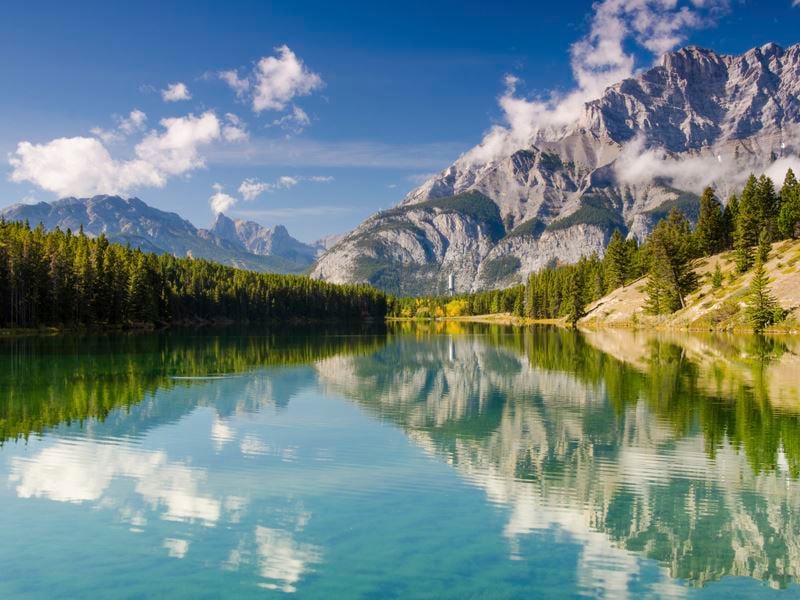
This is the high season, and it's busy – so a little planning goes a long way. The most popular campgrounds, including Two Jack Lakeside, Tunnel Mountain Trailer Court, and Waterfowl Lake, fill up quickly. If camping is part of your plan, book ahead. Alternatively, our self-drive holidays can combine different types of accommodation, giving you flexibility without the stress of piecing it all together yourself.
Hiking is the centrepiece of the summer experience. Trails range from easy lakeshore walks that families can enjoy to multi-day backcountry routes for seasoned trekkers. Wildlife encounters are almost guaranteed – elk wander through town with startling nonchalance, black bears forage in the valley meadows in the early mornings, and if you're lucky, you might spot a grizzly on the higher slopes. Always carry bear spray and know how to use it; it's a genuine requirement rather than an optional extra.
For one of the most memorable experiences in the Canadian Rockies, head east from Banff to the town of Canmore, where helicopter tours take off over the mountains – the classic flight over the Three Sisters Peaks being a firm favourite. River rafting, mountain biking, horseback riding and canoeing round out a summer itinerary that could fill weeks without any effort at all.
Want to explore Alberta's lakes and mountains at your own pace? Our Explore Alberta – Lakes, Mountains & Open Skies self-drive holiday lets you do exactly that. Prefer to have everything arranged for you? Our Experience Alberta independent tour is equally popular – a beautifully structured journey through the very best of the province.
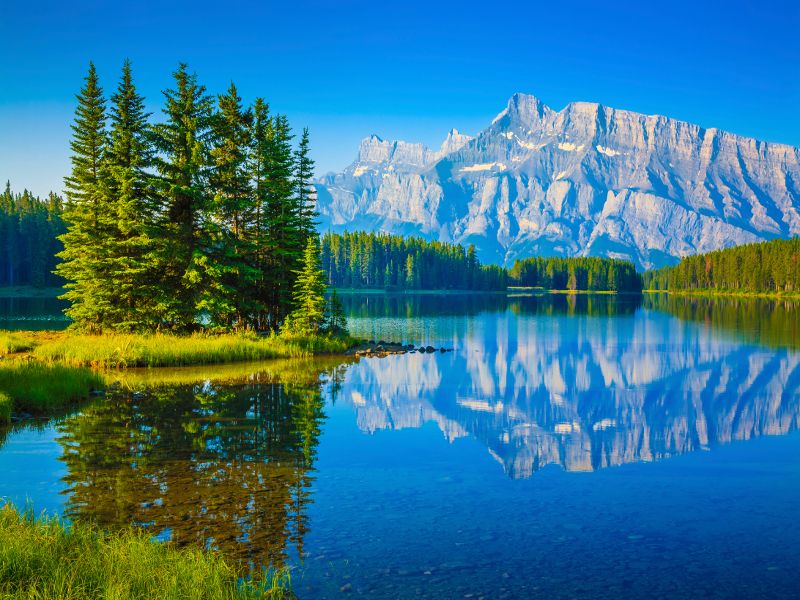
If you've ever dreamed of skiing in truly dramatic mountain scenery, Banff in winter should be near the top of your list. The national park is home to three world-class ski resorts – Sunshine Village, Lake Louise Mountain Resort, and Banff Mount Norquay – and together they offer over 8,000 acres of skiable terrain. Skiers and snowboarders who want to make the most of all three can do so with the tri-area Ski Big 3 lift pass.
One thing worth knowing before you go – and it's a detail that catches first-timers off guard – is that none of the resorts sit within the town of Banff itself. Mount Norquay is closest at just 6 kilometres away; Sunshine Village is 15 kilometres southwest; and Lake Louise Mountain Resort is a 57-kilometre drive. Having a hire car gives you real flexibility. That said, shuttle services do operate from Banff town.
Accommodation is based in either Banff town or the village of Lake Louise. The exception is the wonderful Sunshine Mountain Lodge, which sits ski-in, ski-out at the base of Sunshine Village – a brilliant choice if you want to wake up and hit the slopes within minutes.
Beyond skiing, winter here offers a genuinely rich menu. Ice-climbing on frozen waterfalls, dog sledding through silent forest trails, snowshoeing to viewpoints you'll have almost entirely to yourself, heli-skiing for the truly adventurous, and snowmobiling through the backcountry are all popular options. And after a long day in the cold? The Banff Upper Hot Springs on Sulphur Mountain are a ritual. Soaking in the thermal waters with snow-dusted peaks rising all around you is one of those experiences that stays with you long after you've come home.
Ready to experience Banff in winter? Our Banff and Lake Louise Winter Experience is a wonderful introduction to the region's cold-season magic, combining time in both Banff town and Lake Louise with plenty of flexibility to hit the slopes or explore at your own pace.
Lake Louise is 57 kilometres west of Banff, and the drive alone along the Trans-Canada Highway is worth making. But nothing quite prepares you for that first sight of the lake itself.
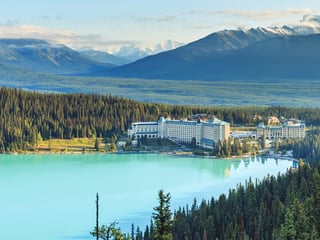
The colour is the thing that surprises people most. Photographs suggest it, but in person the water is an almost luminous jade green – the result of rock flour suspended in glacial meltwater, which catches the light differently at every hour of the day. Early morning, when the air is still and the mountains are reflected in the glassy surface, is the time to be here.
One important thing to know before you go: access to Lake Louise is not available by private vehicle. Guests staying at the Fairmont Chateau Lake Louise have the privilege of direct lakeside access – and staying here, with afternoon tea in the Lakeview Lounge and canoes available from the hotel's own dock, is an experience in its own right. All other visitors are based in Lake Louise Village (about a 10-minute drive away) and will need a pre-booked Parks Canada shuttle or a hotel shuttle to reach the lake. Our most popular village hotel is the Lake Louise Inn – excellent value and a great base for exploring the area.
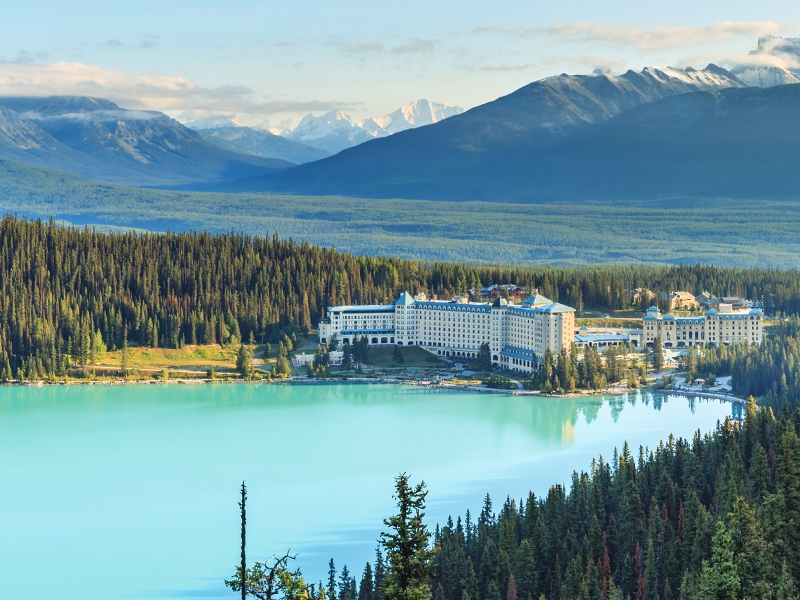
Moraine Lake, 15 kilometres from the village, also requires advance planning. Private vehicles are not permitted; access is via a pre-booked Parks Canada shuttle, a Roam bus connection, or a tour that includes the lake. Around 40% of shuttle passes are released in April, with the remaining 60% available on a rolling two-day basis – so book early. Guests at Moraine Lake Lodge enjoy unrestricted access along with breakfast and complimentary canoe hire, making it a wonderful splurge. Treat this as a priority and plan ahead – it's the single most sought-after experience in the park, and the logistics catch a lot of first-timers off guard.
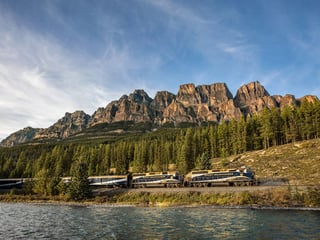
Dreaming of waking up to Lake Louise? Our Canadian Rockies at Leisure plus Rocky Mountaineer combines time at Lake Louise with one of the world's most iconic train journeys. Or explore even more of the Rockies by rail with the Canadian Rockies Explorer plus Rocky Mountaineer.
At 4,537 feet above sea level, the Town of Banff is the highest municipality in Canada – and it has a character all of its own. Strict by-laws govern development within the national park, which means you'll find a genuine, walkable alpine town rather than anything resembling a resort sprawl. The main strip, Banff Avenue, is lined with independent shops, excellent restaurants and mountain-facing viewpoints that most towns would trade their entire high street for.
Accommodation ranges from comfortable mid-range hotels to some genuinely iconic addresses. For the ultimate Rocky Mountain experience, nothing tops the Fairmont Banff Springs Hotel – known affectionately as Canada's “Castle in the Rockies” and one of the great railway hotels of the world. Built in 1888, its turreted silhouette rising above the Bow River valley is one of the most recognisable sights in Canada. For those looking for excellent value without compromising on location, the Elk + Avenue Hotel and the Banff Ptarmigan Inn are two of our most popular choices in town – both well-positioned, comfortable, and consistently well-reviewed by our customers.
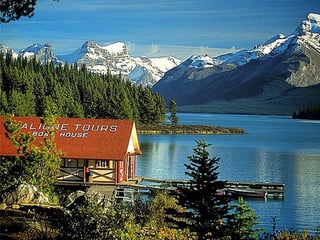
One activity that first-timers sometimes underestimate is the Sulphur Mountain Gondola. The eight-minute ride lifts you 698 metres up the mountain to a boardwalk with genuinely sweeping views over the Bow Valley and the peaks beyond. For day trips from town, Lake Minnewanka offers boat tours and quieter trails, while Johnston Canyon – a well-maintained gorge trail leading to a series of cascading waterfalls – is a firm favourite that's suitable for most fitness levels.
Banff's food scene has grown considerably in recent years. Eddie Burger Bar on Wolf Street does exactly what it promises – proper burgers and those famous deep-fried pickles. Banff Ave Brewing Co. is the place for a post-hike craft beer. And before you leave town – ideally more than once – you must have a BeaverTail: the deep-fried pastry topped with cinnamon sugar, Nutella or lemon that is gloriously, unapologetically Canadian.
One last thing worth saying about Banff, and it matters: the pace of life here is different. Slower, quieter, more attuned to nature. Wildlife walks through town without ceremony – elk cross Banff Avenue, coyotes trot along the Bow River trail, and on a lucky morning you might find a black bear inspecting the edge of a car park. Keep your camera close. Keep a respectful distance. And let yourself settle into the rhythm of a place that has been doing this rather magnificently for well over a century.
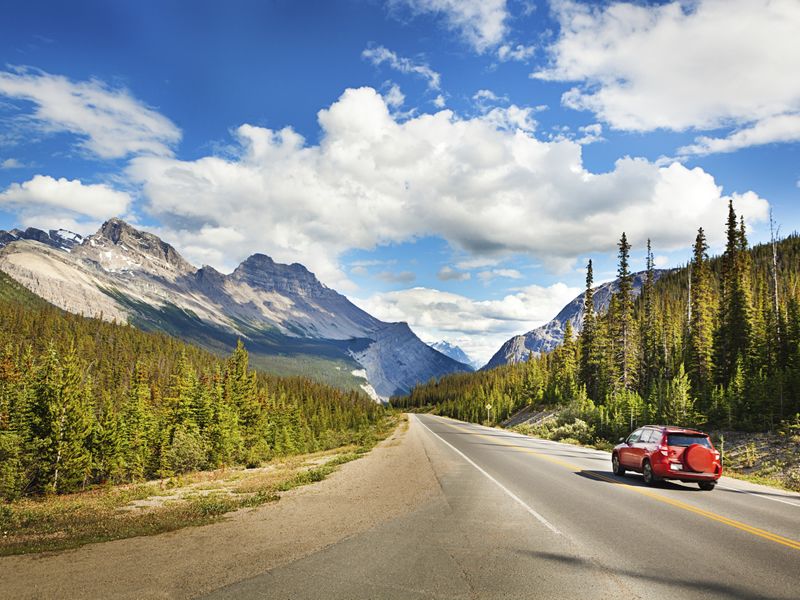
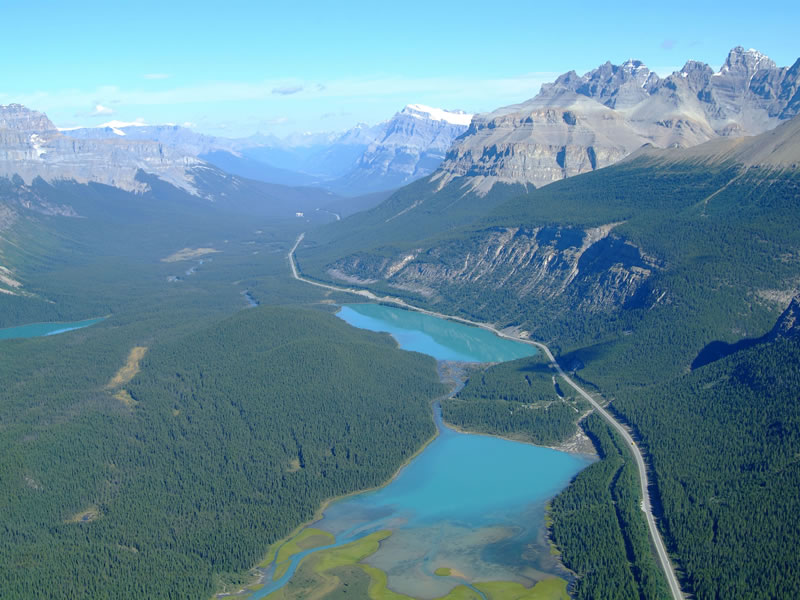
If you're driving between Banff and Jasper, you'll travel the Icefields Parkway – 232 kilometres of what many consider the most spectacular road on the planet. We'd wholeheartedly agree.
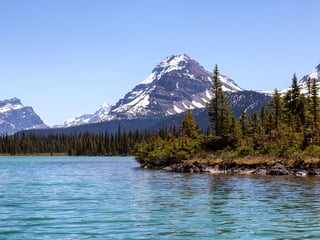
The highlights along the route include Peyto Lake (that vivid turquoise wolf-head shape visible from the Bow Summit lookout), the vast Columbia Icefield, the thundering Athabasca Falls, and more viewpoints than you'll have time to stop at. Allow a full day rather than rushing it and carry snacks – services along the route are sparse.
For those wanting to combine Banff with Jasper in a single trip, our Rockies Trail escorted tour travels this route in full. It's one of our most popular itineraries, and it's not hard to see why.
At Canadian Sky, we know Banff inside out. Whether you're after a self-drive adventure through Alberta's Rocky Mountain parks, a fully guided escorted tour, or an independent itinerary that lets you set your own pace, our team will build the right trip for you. Here's a quick guide to what's on offer:
With over two decades of experience crafting Banff holidays, we know that getting it right is about far more than simply booking flights and a hotel. It's about understanding whether you want the freedom of a self-drive itinerary or the reassurance of a guided tour, which season suits what you're looking for, and which hotels and experiences are genuinely worth it. Our Canada specialists can talk you through all of it honestly – no pressure, just good advice from people who know this destination inside out.
Give us a call on 01342 331796 (Mon–Fri 9am–7pm, Sat–Sun 9am–5pm) or browse our full collection of Banff holidays to start planning.
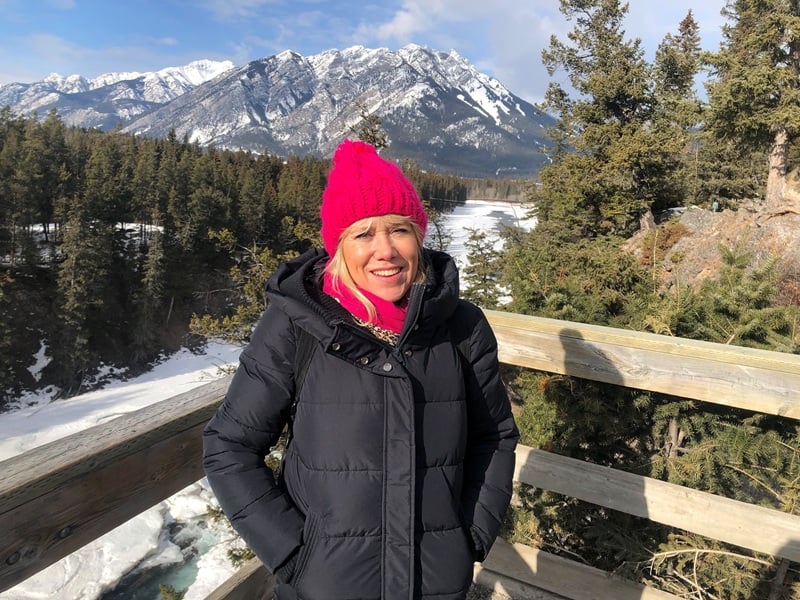
Kathryn, Brand and Partnerships Marketing Director. Kathryn has visited Canada 12 times, starting in 2010 at the Vancouver and Whistler Winter Olympics. Banff has been a highlight of many of those trips.
She still remembers driving into town for the first time and spotting a bear by the roadside, freshly out of hibernation — and arriving at the Fairmont Banff Springs to find those views across the Bow Valley waiting from her bedroom window. What she loves most about Banff is the combination: genuinely stunning scenery, great walks right on the doorstep, and a downtown with enough good restaurants, bars and shops to keep things interesting after a day in the park.
UK and Irish passport holders don't need a full visa to visit Canada, but you will need an eTA (Electronic Travel Authorisation) before you fly. It's quick and straightforward to apply for online, costs CAD $7, and is linked electronically to your passport. Make sure you do it before you travel – you won't be able to board without one.
We'd suggest a minimum of four to five days to do Banff justice, but a week is ideal for a first visit. That gives you time to explore the town, visit Lake Louise and Moraine Lake, take a day trip along the Icefields Parkway, and still have a day or two to simply slow down and soak it all in. Many of our travellers find they wish they'd stayed longer.
Canada generally, and Banff in particular, can be pricey – especially during peak summer months when hotel rates rise sharply. That said, with the right planning it's very manageable. Booking accommodation early, travelling in shoulder season, and being selective about paid activities makes a significant difference. Our specialists can advise on where it's worth splashing out and where you can save.
Absolutely. The gondola rides, wildlife watching, scenic drives, boat tours, hot springs and simply wandering through the town are all wonderful without needing to set foot on a trail. In winter, non-skiers are equally well catered for with dog sledding, snowshoeing and spa days. Banff works for all kinds of travellers.
Very easily, and we'd encourage it. Banff pairs beautifully with Vancouver, Jasper via the Icefields Parkway, and Victoria on Vancouver Island. For those wanting a bigger adventure, combining the Rockies with a Rocky Mountaineer train journey or an Alaskan cruise makes for an extraordinary multi-centre trip. Our specialists are particularly good at putting these kinds of itineraries together – it's one of the things we do best.
If you've fallen in love with the idea of waking up on a lake but the Fairmont Chateau Lake Louise and Moraine Lake Lodge are stretching the budget, here's our insider tip: stay at Emerald Lake Lodge. Tucked away in the heart of Yoho National Park and just a 30-minute drive from Lake Louise, this beautifully secluded lodge sits right on the edge of one of the most stunning lakes in the Canadian Rockies – and most first-timers have never even heard of it. You get that magical, waking-up-on-the-water experience, surrounded by forest and peaks, without the price tag or the crowds. It's one of those places our team recommends with genuine enthusiasm, and guests consistently tell us it was the highlight of their entire trip. A proper hidden gem.

Sign up to our newsletter
Be the first to know about our exclusive offers and holiday inspiration by email.