
Family Self-Drive Canadian Rockies and Ranching
British Columbia
11 nights
From
€1,999
pp

Written by: Anna, North America Product Manager
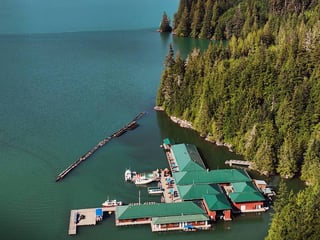
Klahoose Wilderness Resort sits deep in Desolation Sound on British Columbia's remote coast, reachable only by boat, and owned and operated by the Klahoose First Nation. I spent several nights there recently, and this is my honest, first-hand account of what the experience is really like – the wildlife, the culture, the food, and the unexpected gift of doing absolutely nothing at all.
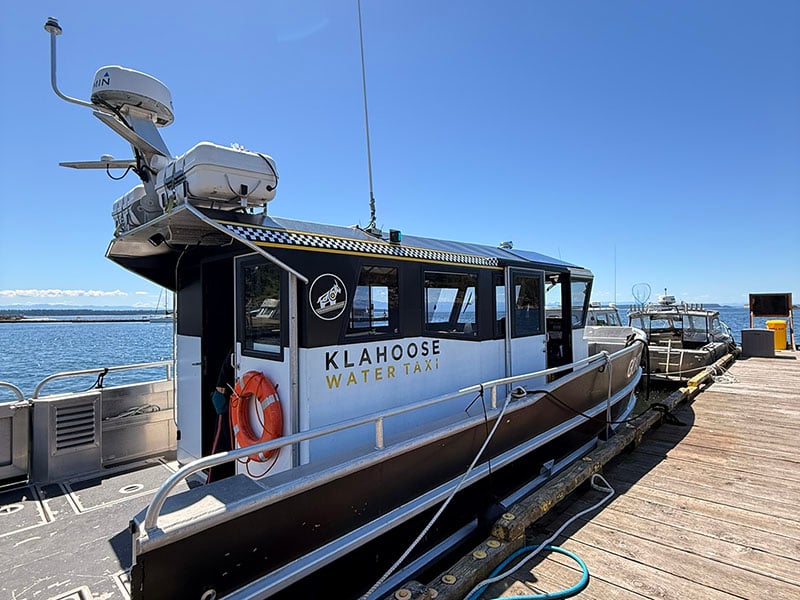
The journey itself sets the tone perfectly. We flew out of Vancouver South Airport – a genuinely sweet little terminal that feels a world away from the busyness of Vancouver International Airport – on a small Pacific Coast Airlines aircraft bound for Powell River. It's a short hop, and landing at Powell River felt like stepping into a different era: a tiny airport, a two-minute walk to collect your bags, and you're already on your way.
From there, a road transfer took us through to the tiny port of Lund, the northernmost point of the Pacific Coast Highway and – fittingly – the end of the road. We grabbed lunch at the pub, watching fishing boats bob in the harbour, and I remember thinking this already felt like somewhere special. Then came the boat transfer aboard the Klahoose's own vessel, The Goat, for a one-hour ride through some of the most breathtaking coastal scenery I've ever witnessed. Fjord-like channels, dense old-growth forest tumbling to the waterline, the kind of silence you feel in your chest. By the time we arrived, I was already converted.
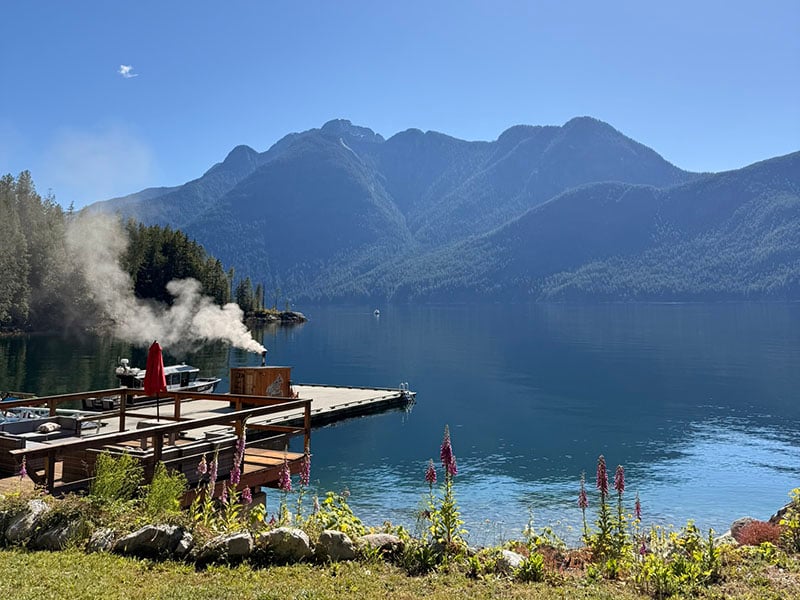
I want to be careful with language here, because “wilderness resort” might conjure the wrong image. This isn't a luxury hotel that happens to be near some trees. Klahoose is a retreat in the truest sense – comfortable, warm, and well-appointed with everything you need, but authentically embedded in the landscape. It merges into its surroundings rather than competing with them. Sustainability isn't a marketing bullet point here; it's woven into everything the property does.
What really sets it apart, though, is the people. The team is warm and genuinely welcoming in a way that feels entirely natural, and the experience is rooted in Klahoose First Nations culture. As guests, we weren't just visitors to a beautiful place – we were guests of the Klahoose people, and that distinction matters. This is their home, and they share it with real generosity.
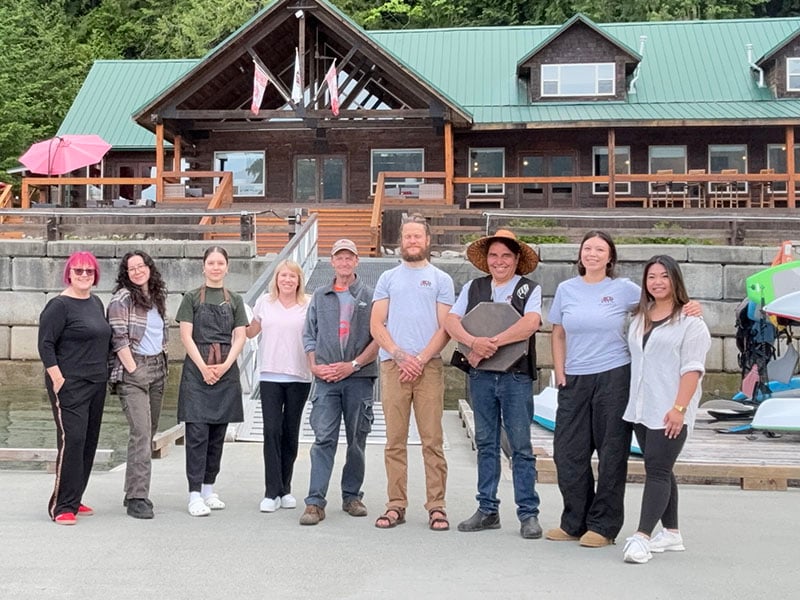
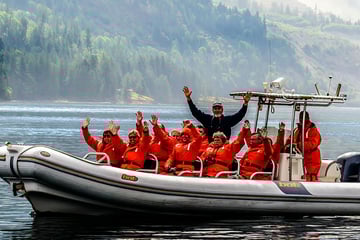
The highlight of my time on the water came aboard The Goat, skippered by Roger with our indigenous guide Ivan alongside us. We headed out into the Homfray Channel, and what followed was one of those experiences you struggle to describe without underselling.
Ivan led us to rock faces where ancient pictographs were etched into the stone, always sheltered beneath a natural overhang – protection from the elements that has preserved them for what could be hundreds, or possibly thousands, of years. Porpoises. Herring. A woolly dog, whose wool the Klahoose people wove into clothing. Figures in canoes. Looking up at those images, trying to fathom how someone reached that rock face from the water to make them, felt quietly extraordinary. Ivan brought them to life in a way no guidebook could.
Desolation Sound – a name that rather undersells it, in my view – stretches to approximately 2,500 feet deep in places. We found it anything but desolate. The fjord-like landscape is dramatic and beautiful, and understanding why settlers and indigenous peoples found it challenging farming country only adds to your respect for those who made their lives here.
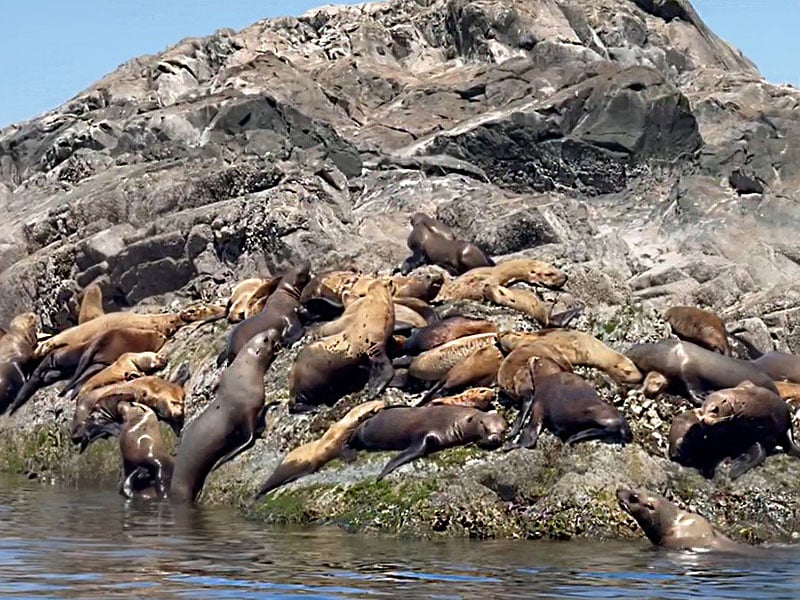
We came across a colony of Steller sea lions sunbathing on the rocks, and they are magnificent, charismatic creatures – some weighing up to 1,500 pounds. Their deep, resonant burping call is completely different from the sharper bark of California sea lions, and hearing it echo off the rock faces is something else. I'll add one honest note: if the wind shifts and you're too close, they do smell powerfully of rotting fish. That's nature.
Bald eagles were a near-constant presence overhead – I hadn't known before this trip that they don't develop their distinctive white head until around four years old, gradually changing colour as they mature. Ivan was full of these details, the kind of knowledge that transforms a wildlife sighting into something you actually understand.
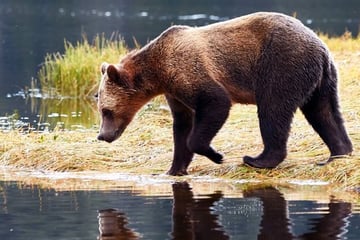
We cruised through Forbes Bay hoping to spot grizzlies – this is bear country in the fullest sense, home to both black and grizzly bears, with elk and deer providing the prey base that brings grizzlies to the area. We didn't find a grizzly that day, but we did spend a long, unhurried stretch of time watching a beautiful black bear roaming the shoreline. Close enough to feel the privilege of it, far enough to be entirely safe. It was one of those genuinely affecting wildlife moments.
Ivan's quiet advice on bear safety stayed with me: if it's black, fight back; if it's brown, lay down. Simple, direct, and the kind of insider knowledge that's worth having before you venture into this landscape.
We also witnessed the working logging industry along these channels – something that, as a non-Canadian, I found fascinating rather than incongruous. Last year's felled areas are being replanted, the practice is closely regulated, and profits feed back into the local nation. Watching log bundles of around fifteen trunks being tipped into the water to float downstream to processing was genuinely compelling – ancient method, modern governance.
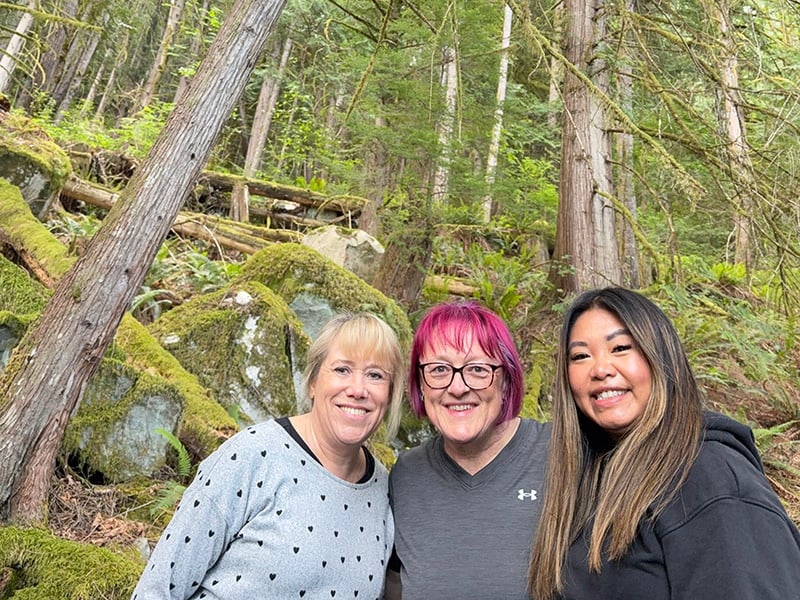
A walk through the forest at Homfray Bay to reach a powerful waterfall is one of those experiences that reminds you why wild places matter. The scale of the trees, the smell of the forest floor, the sudden roar of water – and yes, evidence of bears in the undergrowth that keeps you appropriately alert. Rasheen Falls was equally stunning, the kind of water feature that makes you stop and simply stand for a while.
Turkey vultures circled gracefully on thermals above. Butterflies moved through shafts of light in the forest. This is a place where nature simply gets on with being magnificent.
What I hadn't expected, amidst all that wildlife and wonder, was how much time there was to simply do nothing at all. And I mean that as the highest compliment. Somewhere between the boat trips and the forest walks, I noticed the everyday chaos of life had quietly fallen away without me registering the moment it happened. Emails felt unimportant. Social media felt like something that belonged to a different world entirely. Being unplugged wasn't a hardship here – it was a relief, and it had a way of putting you back in the moment with nature until you remembered, properly remembered, how beautiful the world can be. But Klahoose isn't only about slowing down; there's plenty on offer if you want to fill your own time independently too. One afternoon we took the kayaks out for an hour or so, just paddling quietly along the shoreline, no guide, no itinerary, nowhere to be. It was, without exaggeration, one of the most serene and peaceful things I've ever experienced – the water glassy and still, the wilderness rising up on all sides. At one point a shoal of herring passed directly beneath us, close enough to see them flash silver under the hull, and I sat there completely still, not wanting to break whatever spell that moment had cast.
The food at Klahoose matched the experience beautifully: hearty breakfasts to fuel a day's exploring, packed lunches of delicious sandwiches, fruit and something sweet tucked in for the trail, and three-course dinners in the evening that genuinely surprised me. A fresh salad starter, well-cooked mains – think roasted chicken with seasonal vegetables – and desserts like a properly made crème brûlée. A couple of glasses of house wine alongside. After the days we were having, it hit exactly the right note.
The evenings, though, were where the magic continued. Fireside chats with members of the Klahoose team, indigenous stories shared openly and generously, and the chance to watch traditional craft-making – these were the moments that lingered longest.
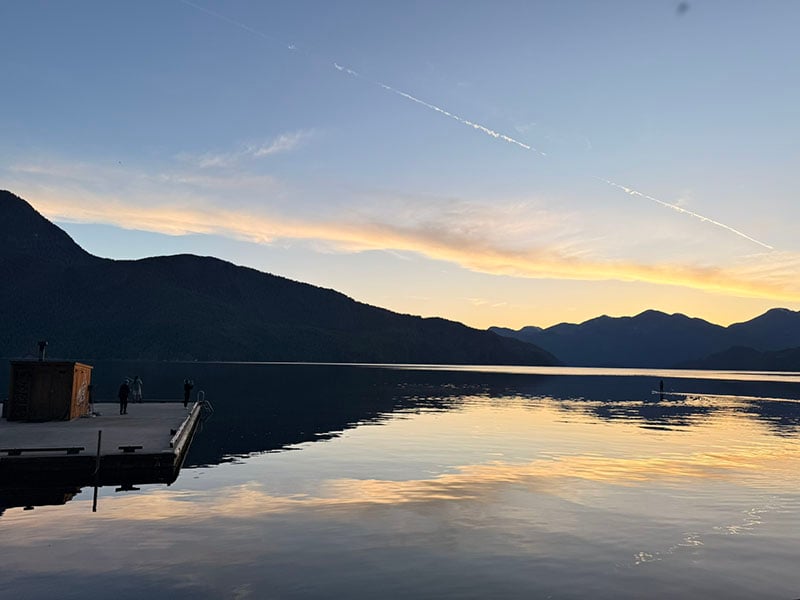
This is a destination for travellers who want something more than beautiful scenery. It suits those who are curious about Canada's indigenous cultures, who find meaning in wildlife encounters rather than just ticking them off, and who are happy to let go of connectivity and simply be present somewhere remarkable.
It is not, to be clear, a five-star luxury lodge. The comfort is real and the food is excellent, but the soul of the place is wilderness. Come expecting nature on its own terms, and you'll leave transformed.
At Canadian Sky, we include Klahoose Wilderness Resort as part of our curated itineraries along the British Columbia coast precisely because it delivers something we look for in every trip we build: authentic experience, expert local guidance, and a genuine sense of place. If you're considering British Columbia for your next adventure, this is one we'd stake our reputation on.
It can be booked as a standalone twin-centre stay with Vancouver, or woven into a wider wildlife and wilderness holiday across the province – our team can talk you through the options and the best season for what you want to see.
Because honestly? It's one of the best trips I've ever taken.
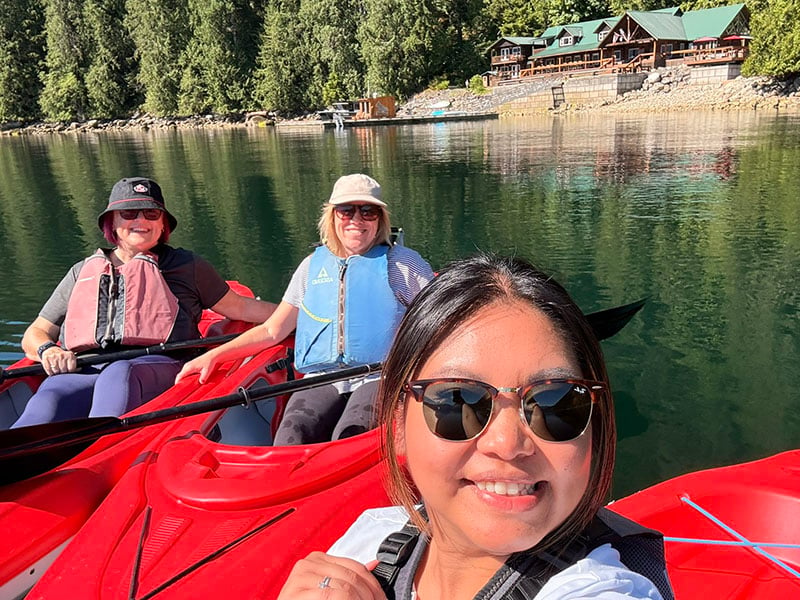
Anna, North America Product Manager (in front). Anna loves a holiday that mixes adventure with a little luxury – hiking in national parks, exploring new cities, and rafting on the river, balanced out with a highlighted luxury stay for that bit of R&R along the way. She's travelled to North America more than 15 times, and one of her best travel memories is seeing black bears in the wild – an experience Klahoose's Desolation Sound coastline delivers better than almost anywhere else.
You fly from Vancouver to Powell River, then take a short road transfer to the port of Lund, followed by a one-hour boat transfer aboard the resort's own vessel through Desolation Sound. It's a genuinely scenic journey in its own right, and the resort is only accessible by boat or floatplane.
It depends what you want to see. From mid-June to mid-August, the focus is on orca and humpback whales, alongside kayaking and cultural tours. From late August to mid-October, guided viewing platforms open for grizzly bear season, as the bears fish for salmon. Visit from May to mid-June and you have a good chance of seeing both black and grizzly bears, plus returning whales and porpoise.
Not in the five-star sense. The lodge rooms and cabins are comfortable and well-appointed, and the food and service are excellent, but the experience is built around wilderness, wildlife and Klahoose First Nations culture rather than polish or opulence. If you're after an authentic, immersive experience over a conventional luxury stay, it's a wonderful fit.

Sign up to our newsletter
Be the first to know about our exclusive offers and holiday inspiration by email.